
Before booking duct cleaning, it helps to know which equipment serves your home and where it sits. You do not need technical training, but “the AC is outside” can mean different things: an outdoor condenser connected to an indoor air handler, or a packaged system with the main components together outdoors.
This guide explains the difference, what to count and which access details to mention. Start with what you can see from a normal, accessible position. There is no need to remove covers, climb onto a roof or enter an attic to prepare an enquiry.
Split systems have separate indoor and outdoor equipment
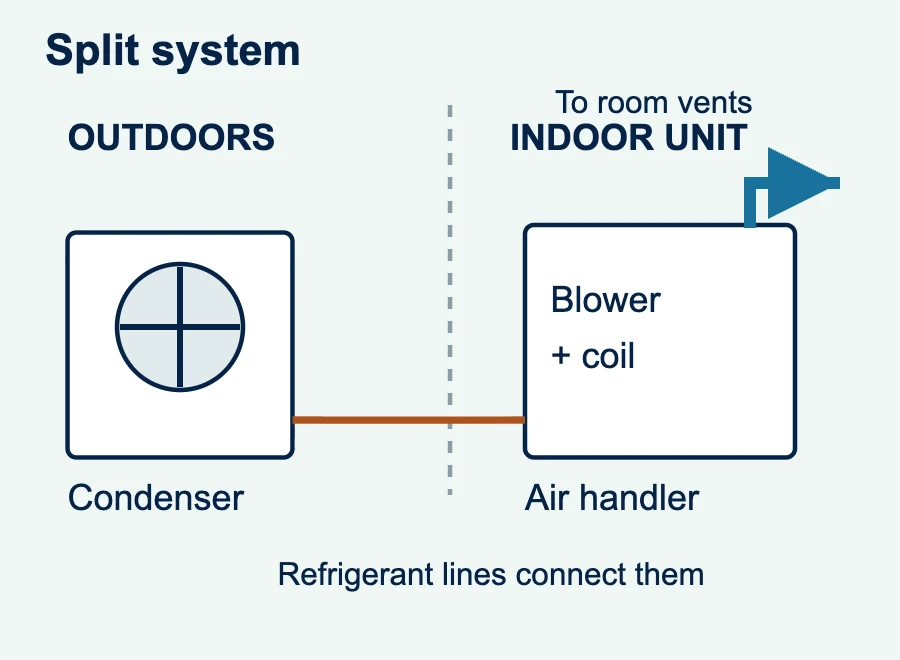
In a typical ducted split-system AC, the indoor air handler contains the blower that moves air through the home's ducts and the coil where air is cooled. The outdoor unit, often called the condenser, contains the compressor and outdoor coil. When cooling, that outdoor section releases heat outside.
The two cabinets work together as a system. They are not two indoor units, and the outside cabinet is not another room vent to add to your vent count. Refrigerant lines connect the equipment; the outdoor fan does not blow cooled air directly into the house.
Indoor does not necessarily mean inside a living room
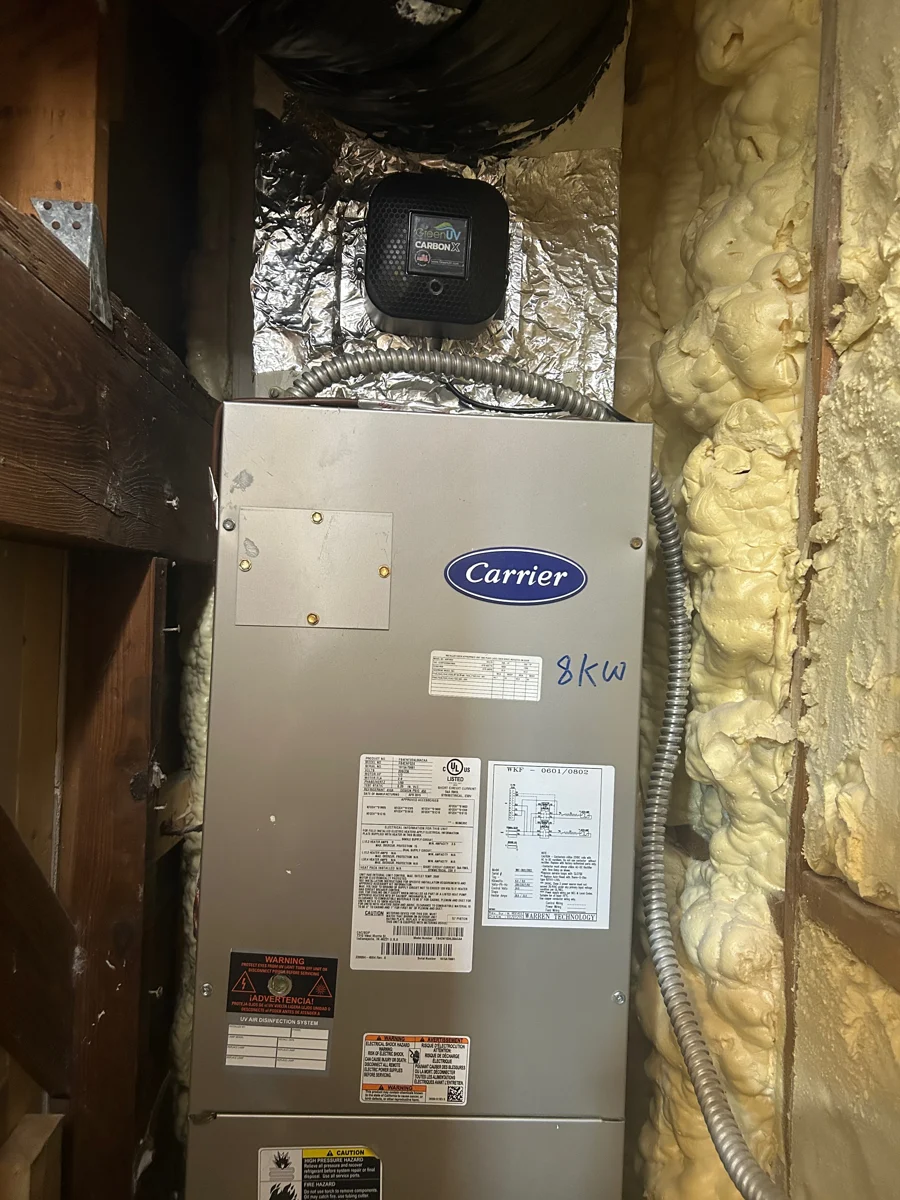
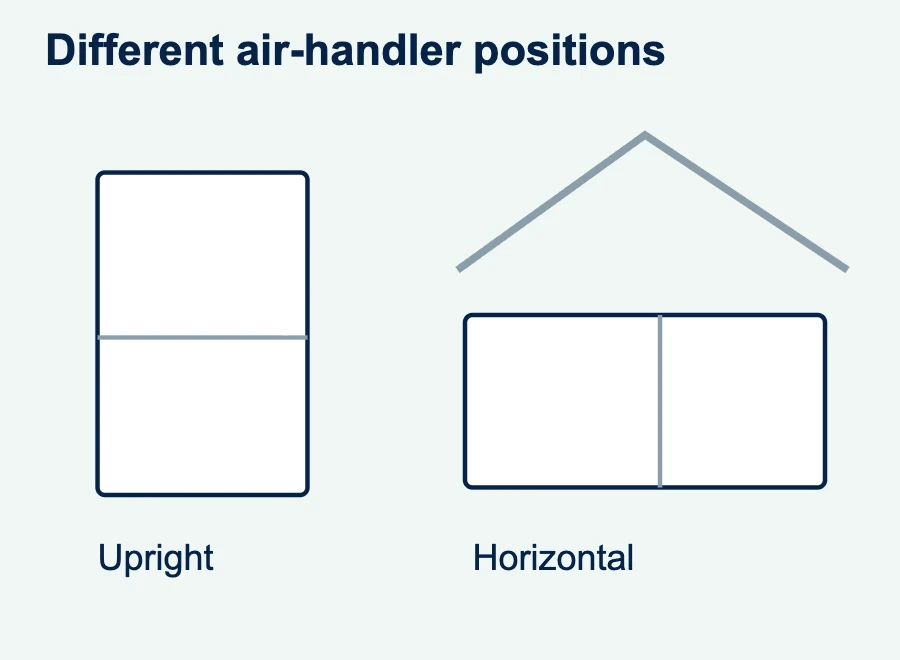
An air handler may stand vertically in a closet or garage, or lie horizontally in an attic. The label “indoor unit” describes the equipment's role, not whether it is somewhere you spend time.
When requesting a quote, say where each air handler is located. “In the hall closet behind shelving” or “in the attic above the garage” is more useful than “inside.” If you do not know where it is, say so rather than opening panels or searching an awkward space.
The photo and diagrams below illustrate placement and equipment types, not AC installation services.
What a packaged unit means
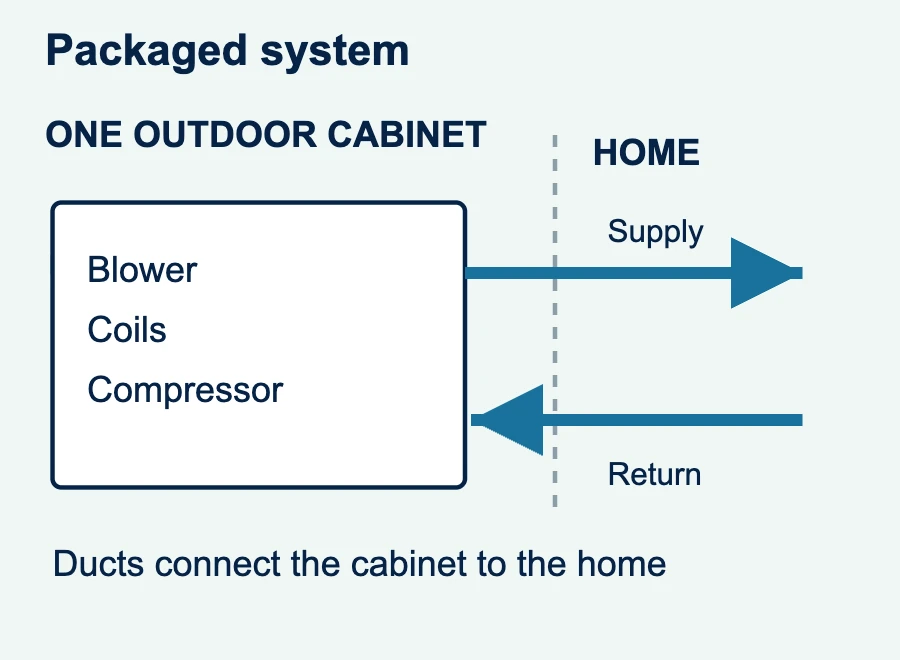
A packaged AC unit combines the main cooling and air-moving components in one outdoor cabinet. The compressor, coils and blower are together, rather than divided between an indoor air handler and a separate outdoor condenser. Supply and return ductwork connect the package to the building.
So, if you mean “both parts are outside,” a packaged unit may be what you have. It is the combined equipment arrangement—not simply the number of boxes outside—that matters. A packaged system can still serve vents inside the home even though it has no separate indoor air-handler cabinet.
Packaged equipment may be beside a building or on a roof. You do not need to reach it yourself. Tell us what you already know about its position and describe the arrangement as packaged or all-in-one if that is how your equipment documentation identifies it.
For an independent visual explanation, see the Department of Energy's guide to split and packaged air-conditioning systems.
Two outdoor cabinets do not prove it is packaged
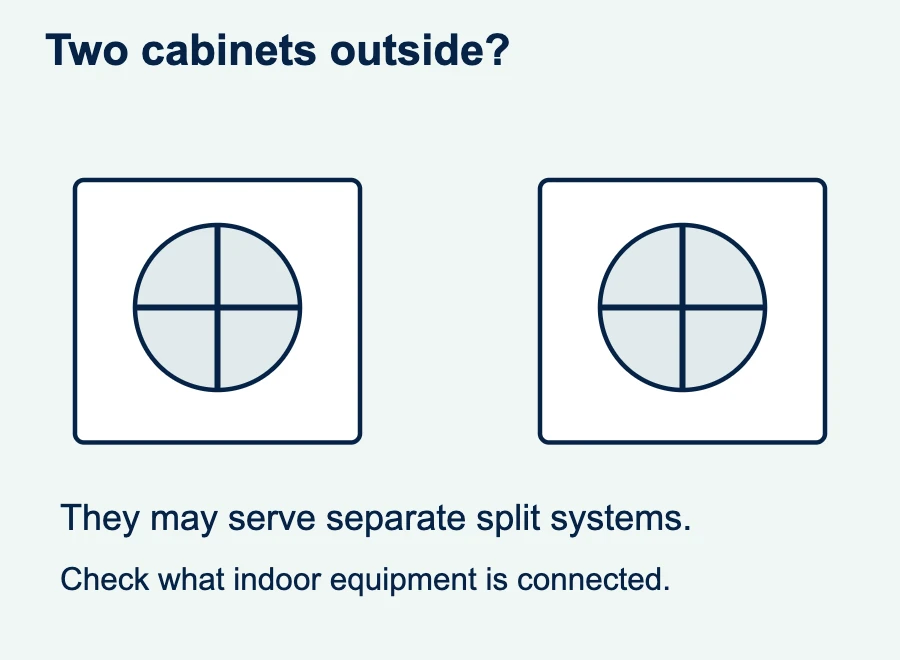
Two condenser cabinets outside might serve separate split systems. Counting those cabinets alone does not establish how many indoor air handlers you have or which rooms each system serves.
Likewise, two thermostats do not automatically mean two air handlers: some ducted systems divide their airflow into controlled zones. Tell us what you know about both the equipment and controls, without assuming they match one-for-one.
If the arrangement is unclear, a wider exterior photo and any equipment details already available can help explain your question. Keep the covers on and let us discuss what else is needed.
Equipment cleaning and duct cleaning are different jobs
The distinction matters when agreeing the work. Cleaning connected ductwork is not automatically the same as cleaning every component inside an AC cabinet.
For Clean Air Ducts USA, blower cleaning is optional and agreed separately. Deeper coil work and other equipment work also need a clear scope. Tell us if you want equipment cleaning discussed rather than assuming it is included in every duct clean.
For an all-in-one outdoor packaged unit, we can discuss cleaning suitable connected ductwork, but we do not provide cleaning of the packaged unit itself. Describe the arrangement when enquiring so we discuss the right service from the outset.
Our air-duct cleaning service page explains suitability, methods and the visit. For a routine estimate, use our air-duct quote calculator.
Describe access without investigating the equipment
Mention shelving, stored belongings, a narrow cupboard opening or a high access hatch if you already know they are present. Tell us about damaged or fragile ductwork you have noticed, but do not touch it to check.
In a rented home or condo, explain whether the equipment is in your own space or an area managed by somebody else. Access arrangements and responsibility may need confirming before a visit. Do not assume a communal equipment area is yours to open.
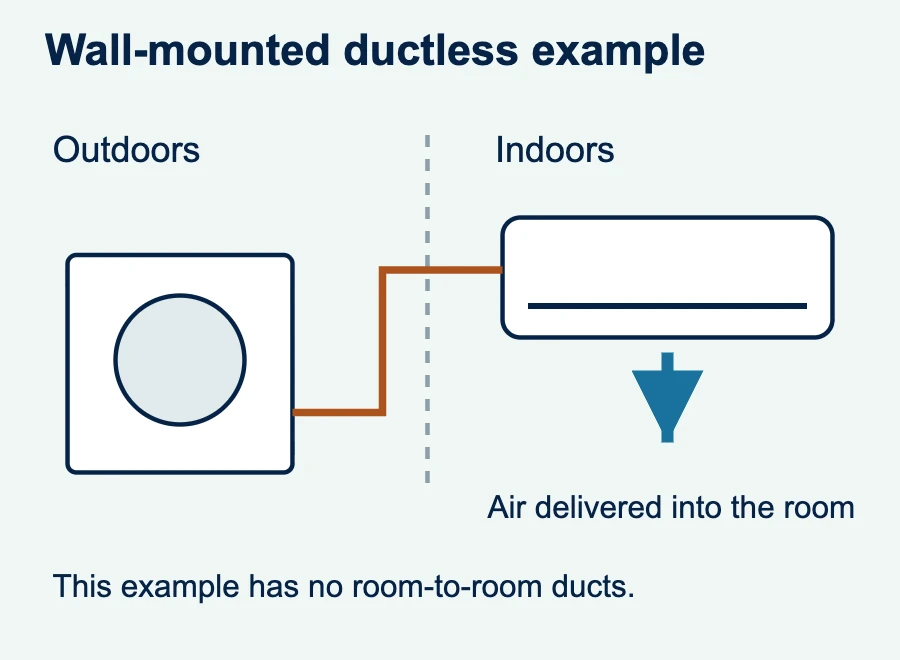
If your home uses wall-mounted ductless units, mention that too. A ductless room unit is not the same arrangement as an air handler distributing air through a house-wide duct system.
Count vents separately from equipment
A room vent is an opening where air enters or leaves the room, not another AC unit. For the quote calculator, count the visible supply vents and returns together. Record the number of indoor air handlers separately. If a grille, shared return or unusual layout leaves you unsure, explain that when enquiring rather than treating an uncertain count as final.
Useful photos and details to have ready
A wider photo can show the cabinet's position and surrounding access better than a close-up of its label. Take it only from somewhere you can normally stand. Keep people, private documents and access codes out of the frame. Do not remove a cover for a better shot.
For your enquiry, gather:
- Your property address and contact details.
- Visible supply vents and returns counted together, if known.
- Each indoor air handler's location, or the packaged-unit arrangement.
- Access restrictions and any permissions that need arranging.
- What prompted the enquiry and any separate equipment-cleaning questions.
Ask us how to provide photos when you contact us; they are not a requirement to start a conversation. You do not need a perfect equipment description. A clear account of what you know helps us discuss a suitable scope without treating every home as the same job.
Contact Clean Air Ducts USA about your equipment and access.
Equipment diagrams explain typical arrangements. The photograph shows equipment placement, not installation work.
Have a question about your property?
Tell us about your air duct, dryer vent or HVAC UV light inquiry. We agree the scope and price upfront.
Contact us →